Role of Ideonella sakaiensis in Reducing Plastic Waste: Current Updates and Future Prospects
Shadma Khan, Nidhi Mishra, Laiba Siddiqui, Madhurima Tiwari*
DOI: 10.22607/IJACS.2021.904032
Volume 9, Issue 4 | Pages: 422-425
Abstract
Plastic is a non-biodegradable material which does not leave the face of our planet earth. Its non-biodegradability and durability
make it almost impossible to degrade biologically. On an average 1 million plastic drinking bottles are purchased per minute
throughout the globe. Polyethylene terephthalate (PET) is one of the most widely used plastics which is used in the production
of drinking bottles. Continuous efforts are being made to bring down the total plastic waste accumulation by either recycling
or by chemical degradation, methanolysis, ammonolysis in laboratories, and in industries but these processes are not only time
taking but are also cost ineffective and require a lot of labor and expertise in handling the chemicals. Alternatively, bio catalytic
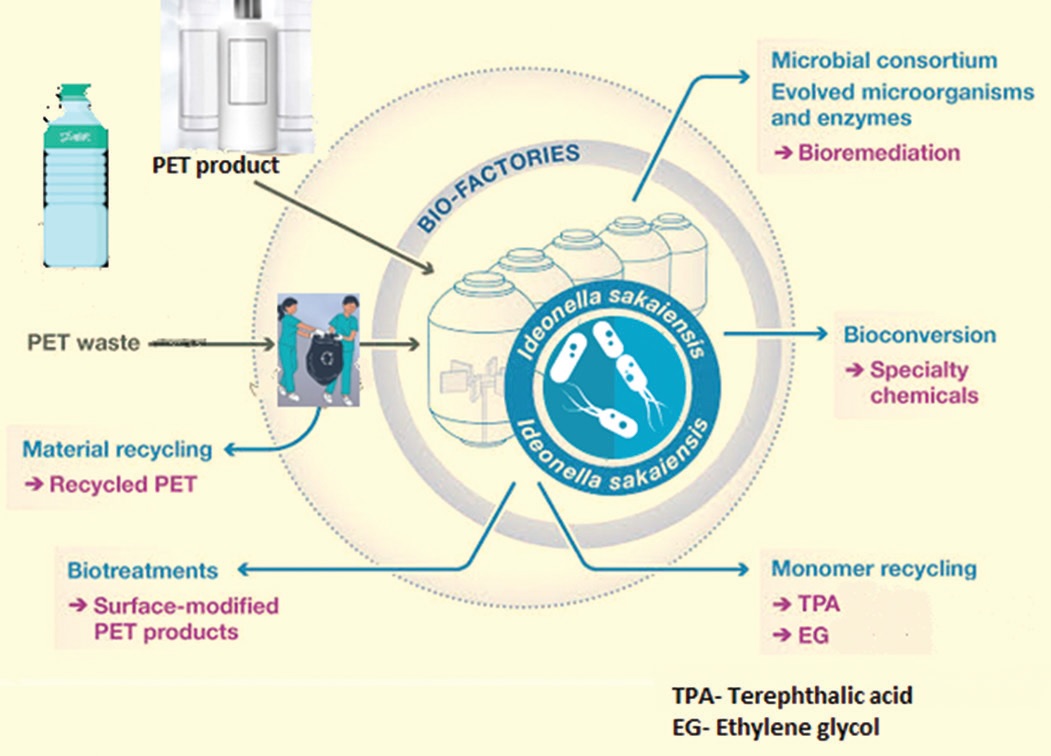
degradation can be applied as an eco-friendly alternative to degrade plastic. A bacteria named, Ideonella sakaiensis was reported
that is capable of consuming and can breaking down plastic specifically, PET as an energy source and sole carbon. It consists
of two enzymes which can degrade PET, PET hydrolase, and MHET hydrolase. It can prove as an excellent alternative for
bioremediation of already accumulated plastic waste worldwide. Bacteria, I. sakaiensis could be considered as a great weapon
in the efforts for sustainable development that are underway worldwide. The aim of our review is to highlight the importance of
I. sakaiensis which can help in enzymatic plastic degradation.
Keywords
Bacteria Plastic accumulation Polyethylene terephthalate Non-biodegradable Sustainability Durability Ideonella sakaiensis.References
No references available for this article.
Citation
Shadma Khan, Nidhi Mishra, Laiba Siddiqui, Madhurima Tiwari*. Role of Ideonella sakaiensis in Reducing Plastic Waste: Current Updates and Future Prospects. Indian J. Adv. Chem. Sci. 2022; 9(4):422-425.