Preparation of Poly(ε-caprolactone)/Polyethylene Glycol (PCL/PEG) Blends Nanofibers by Electrospinning for Biomedical Applications
B. Sowmya, Athira John, P. K. Panda*
DOI: 10.22607/IJACS.2020.801001
Volume 8, Issue 1 | Pages: 1-3
Abstract
Scaffolds are 3D template for regenerating the damaged tissues. Polymer scaffolds offer flexibility, mechanical strength, and
specific surface interaction sites for cell adhesion. The increasing rate of accidents in recent years has led to a rise in the demand for
artificial substrates like scaffolds. In this work, the effort has been made to prepare electrospun polymer nanofibers for biomedical
applications. Nanofibers are of more interest in this field because the architecture of the fibers at the nanoscale mimics the
extracellular matrix (ECM). Poly(ε-caprolactone) (PCL) is a semi-crystalline, hydrophobic polyester while polyethylene glycol
(PEG) is a hydrophilic polyether. The PCL/PEG blend nanofibers of various ratios were successfully prepared by electrospinning.
The pure and blend nanofibers were characterized by Fourier-transform infrared (FTIR) spectroscopy, differential scanning
calorimetry (DSC), and scanning electron microscopy (SEM). It was observed from the FTIR and DSC studies that both PCL
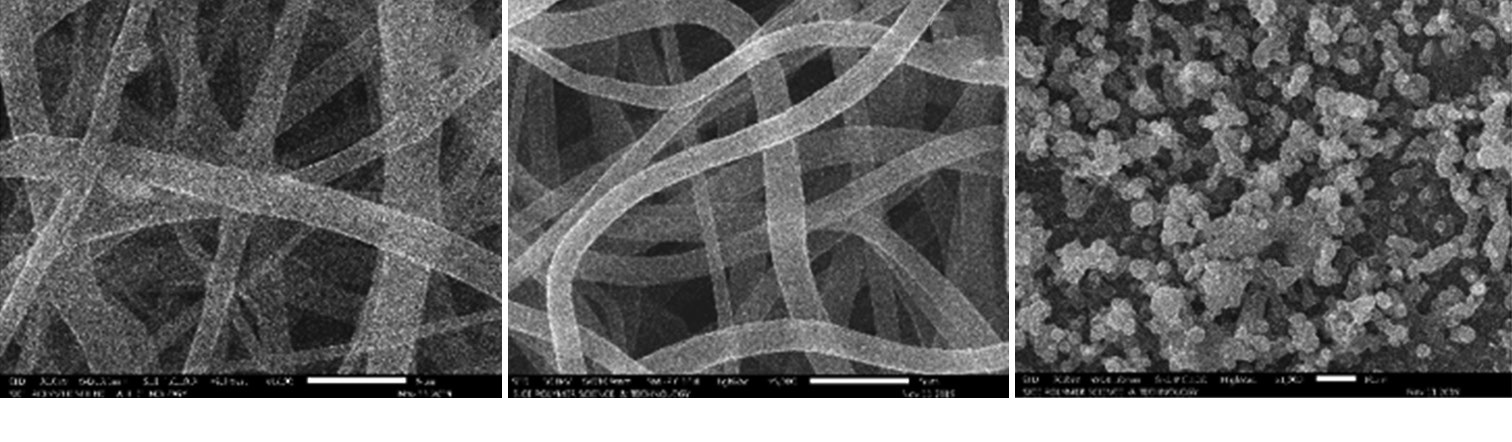
and PEG phases coexist. The SEM results displayed the changes in the morphology with the addition of PEG.
Keywords
Scaffold Electrospinning Nanofibers Polycaprolactone Polyethylene glycol hydrophobic Hydrophilic.References
No references available for this article.
Citation
B. Sowmya, Athira John, P. K. Panda*. Preparation of Poly(ε-caprolactone)/Polyethylene Glycol (PCL/PEG) Blends Nanofibers by Electrospinning for Biomedical Applications. Indian J. Adv. Chem. Sci. 2020; 8(1):1-3 .