Comparison of Extent of Pollution of Minor-Basavanna Canal Water with Respect to Water of Tungabhadra Dam, Hospet and its Suitability for Irrigation
Doddamani Hanumanthanaik, Babu Giriya Gowda*
DOI: 10.22607/IJACS.2020.803004
Volume 8, Issue 3 | Pages: 94-101
Abstract
Canals are waterways channels, or artificial waterways, which are in many areas serving the basic needs of water, play a
significant role in shaping the environmental and ecological balance of the region through which it flows. Despite of all these
versatile contributory roles, knowingly or unknowingly are being used as a dumping site for disposal of municipal and small
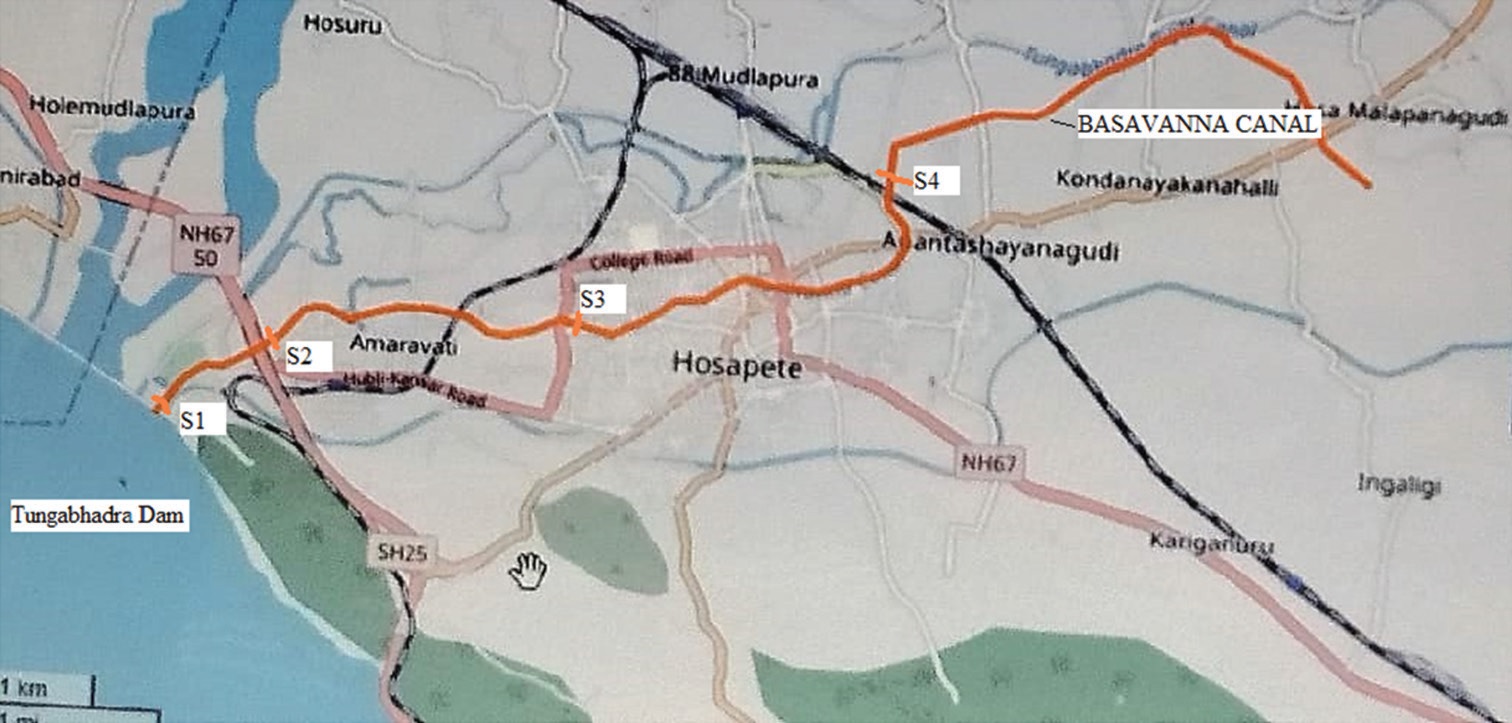
industrial waste. The main goal of this study was to compare extent of pollution of Minor-Basavanna canal water with respect
to water of Tungabhadra Dam (T.B. Dam), Hospet, and ascertain its suitability for irrigation. The present study was divided
into two study areas, i.e., T.B. Dam and Basavanna canal. Water samples were collected from four locations from January 2019
to December 2019. Attempts were made to study and analyze the physicochemical characteristics of the T.B. Dam and canal
water such as temperature, pH, electrical conductivity, total dissolved solid, total alkalinity, dissolved oxygen, chemical oxygen
demand, and biological oxygen demand, which were investigated to know the present status of the Basavanna canal water
quality with compare to T.B. Dam water. During the present study, Basavanna canal water showed significant pollution, is due to
human activities such as dumping wastes, anthropogenic activities, washing activities, and discharge of sewage along the canal.
Keywords
Tungabhadra dam Basavanna canal Physicochemical parameters Pollution.References
No references available for this article.
Citation
Doddamani Hanumanthanaik, Babu Giriya Gowda*. Comparison of Extent of Pollution of Minor-Basavanna Canal Water with Respect to Water of Tungabhadra Dam, Hospet and its Suitability for Irrigation. Indian J. Adv. Chem. Sci. 2020; 8(3):94-101.