Degradation of Endocrine Disruptors using Modified TiO2 Nanorods under Sunlight
Radhika.S, Jesty Thomas*
DOI: 10.22607/IJACS.2020.804003
Volume 8, Issue 4 | Pages: 140-149
Abstract
Anatase phase TiO2 nanorods modified with perylene nanoparticles (PeNPs) (PNR520) showing excellent photocatalytic activity
under sunlight were synthesized. Titanium isopropoxide [C12H28O4Ti] and aqueous KOH solution were hydrothermally treated
to form hydrogen titanate and were calcined at 520°C to get TiO2 nanorods. PeNPs were prepared from perylene-3,4,9,10-
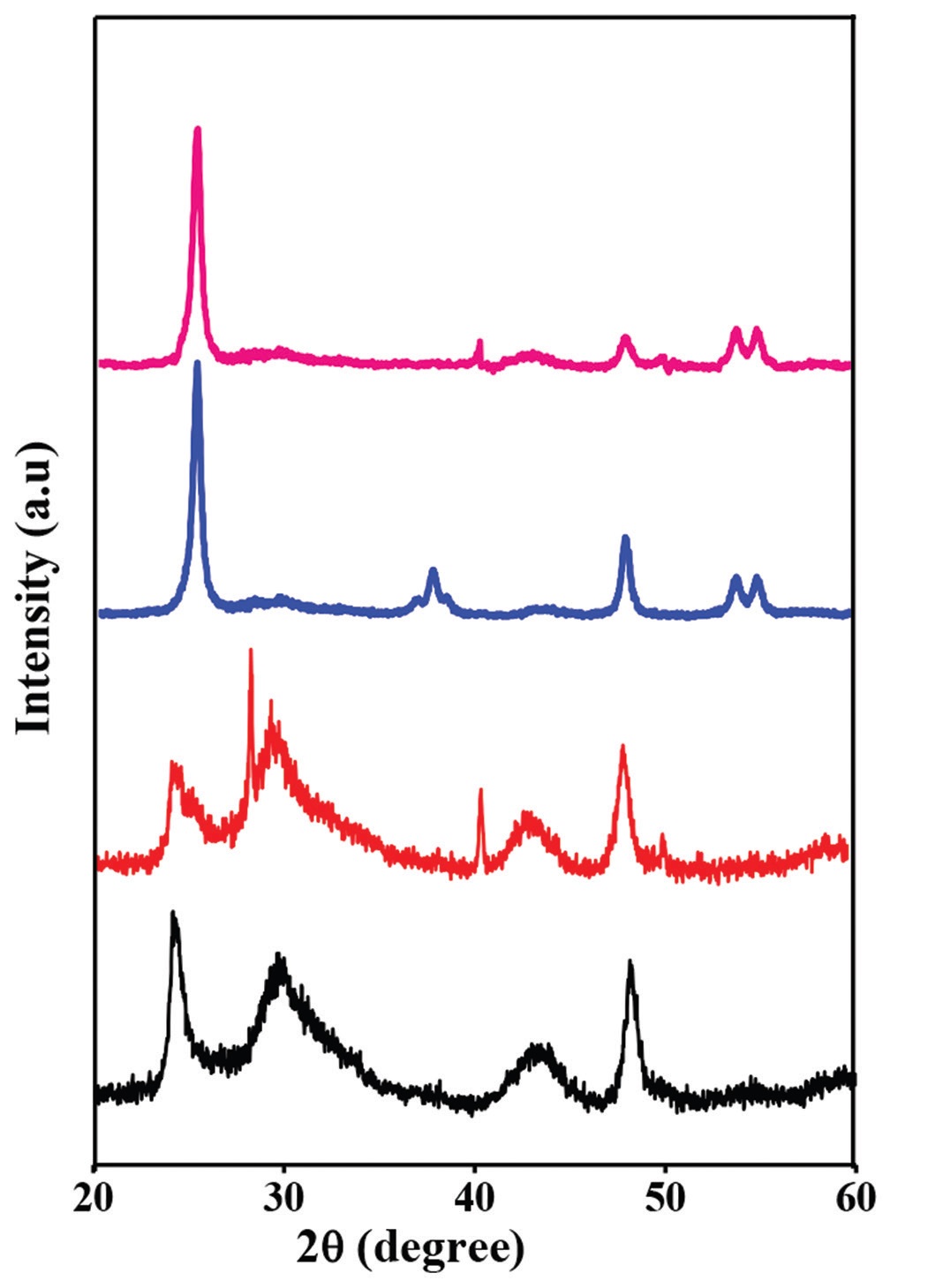
tetracarboxylic dianhydride using D-glucosamine hydrochloride. Phase transition from hydrogen titanate to pure anatase phase
TiO2 was confirmed by X-ray diffraction analysis. high resolution transmission electron microscopic analysis shows that the
anatase phase TiO2 consists of nanorods. Photocatalytic activities of the samples were assessed by studying the photocatalytic
degradation of rhodamine B. Study reveals that TiO2 nanorods modified with PeNPs could completely degrade common
endocrine disruptors such as 4-chlorophenol, resorcinol, and salicylic acid under sunlight and are more efficient than the
commercial photocatalyst Degussa P25.
Keywords
Anatase TiO2 Perylene nanoparticles Pollutant degradation Solar photocatalyst.References
No references available for this article.
Citation
Radhika.S, Jesty Thomas*. Degradation of Endocrine Disruptors using Modified TiO2 Nanorods under Sunlight. Indian J. Adv. Chem. Sci. 2021; 8(4):140-149 .