Hydro geochemical Insights and Groundwater Quality Assessment of Pulivendula Mandal, Kadapa, Andhra Pradesh
C. Krupavathi, S. Srinivasa Gowd*, P. Ravi Kumar, G.Nagalakshmi Devi, U. Lahari
DOI: 10.22607/IJACS.2025.1301004
Volume 13, Issue 1 | Pages: 32-42
Abstract
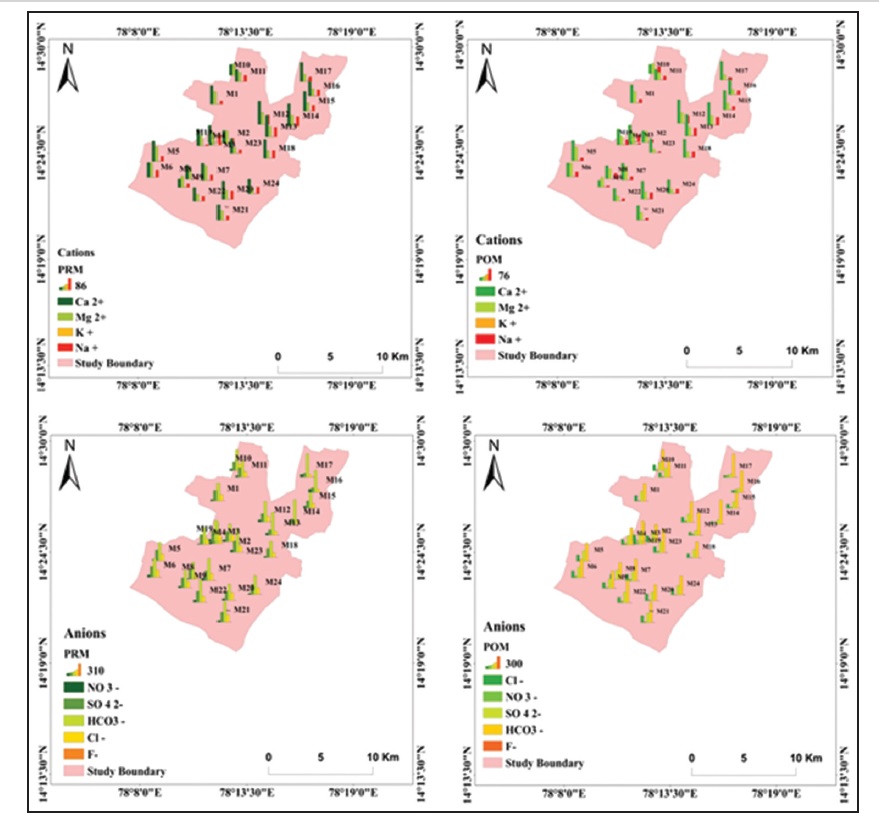
Several hydro geochemical processes controlling the geochemistry of aquifers, the suitability of groundwater for agriculture, and routine use were assessed in the Pulivendula area during the current survey. To characterize the main physicochemical components of the aquifer water, a total of 24 drilling locations were selected. The findings showed that the groundwater had an alkaline pH. Due to the ideal limits of total dissolved solids, magnesium (Mg2+), sodium (Na+), potassium (K+), sulphate (SO42−), and chloride (Cl−), the majority of samples fall within the appropriate range. Residential use of groundwater should be avoided in areas when EC, total hardness, calcium (Ca2+), and nitrate (NO3−) slightly exceed recommended standards. With very few exceptions, the groundwater in the research region is appropriate for human consumption, according to the analytical findings. The Piper diagram was utilized to analyze all samples to identify the primary hydro geochemical components found in groundwater. In this area, cations predominate in groundwater with Ca2+ > Na+ > Mg2+ > K+, followed by anions HCO3 − > Cl− > SO4
2− > F−. According to the Gibbs plot study, the primary hydro geochemical mechanism controlling the geochemistry of the groundwater in this area is the rock-aquifer interaction. It was discovered that the greatest number of water samples was ideal for cultivation.
Keywords
Hydrogeochemistry Groundwater Quality Assessment Pulivendula YSR DistrictReferences
No references available for this article.
Citation
C. Krupavathi, S. Srinivasa Gowd*, P. Ravi Kumar, G.Nagalakshmi Devi, U. Lahari. Hydro geochemical Insights and Groundwater Quality Assessment of Pulivendula Mandal, Kadapa, Andhra Pradesh. Indian J. Adv. Chem. Sci. 2025; 13(1):32-42.