Removal of Dichlorinated Volatile Organic Compounds from Aqueous Solutions Using Polydimethylsiloxane Membranes Cured with Different Cross-Linking Reagents
K. Pattabhi Ramaiah, M. Veera Narayana Reddy, S. Sridhar, A. Krishnaiah*
DOI:
Volume 4, Issue 1 | Pages: 49-55
Abstract
Hydrophobic polymer possesses significant potential for selective separation of volatile organic compounds (VOCs)
from their aqueous solutions by pervaporation. In the present study, composite membranes of polydimethylsiloxane
supported on polyvinylidenefluoride substrate were synthesized and cured the membranes with various cross-
linking reagents such as tetraethoxylsilane (TEOS), phenyltrimethoxylsilane, and octyltrimethoxylsilane.
The potential of the cross-linked membranes for the extraction of volatile dichlorinated hydrocarbons, such
as dichloromethane and 1,2-dichloro ethane, which pose serious environment threat and health hazard, was
evaluated. Cross-linking and surface morphology of the indigenously developed membranes were determined
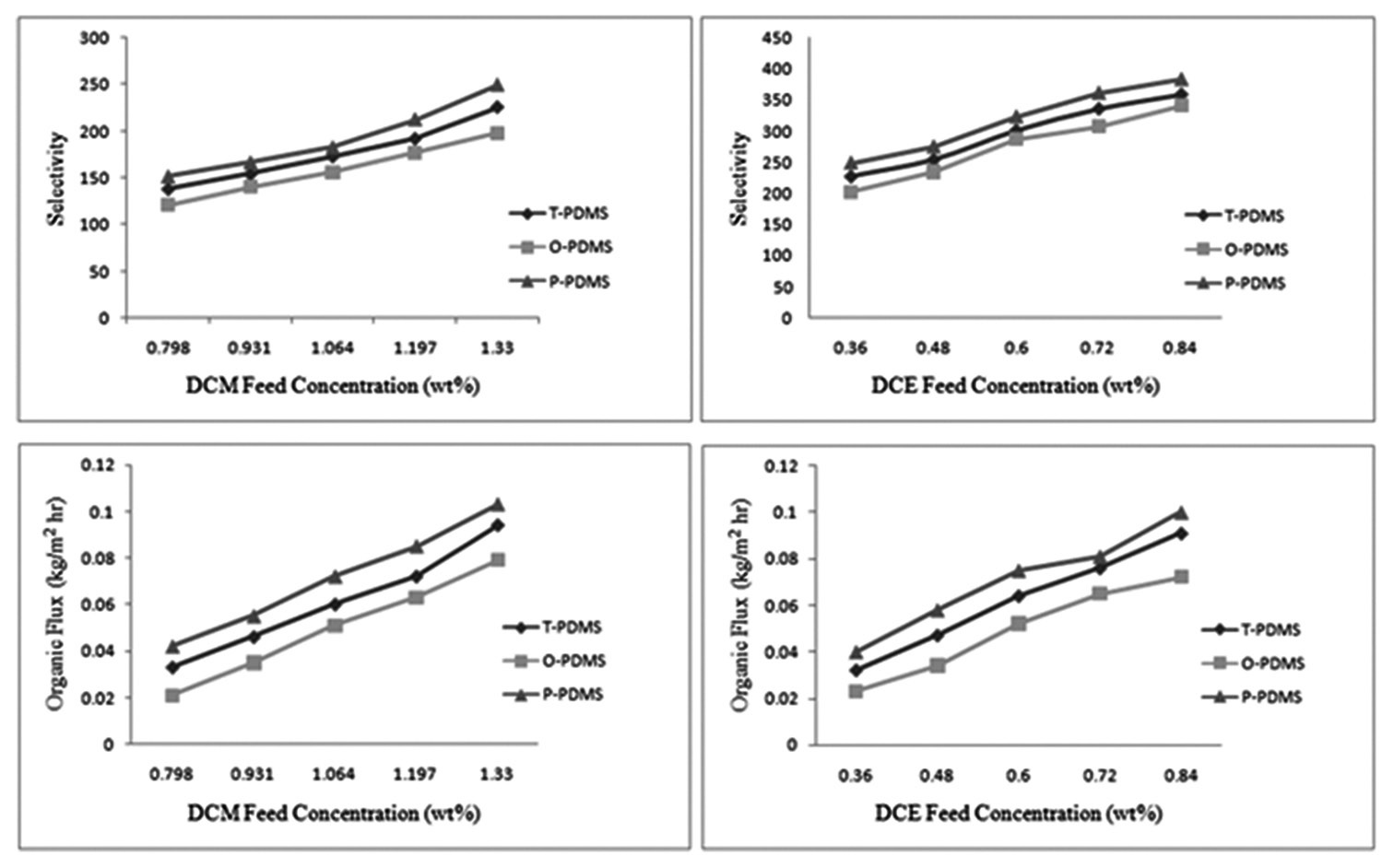
by Fourier transform infrared and scanning electron microscopy. Effect of operating parameters, such as feed
composition and permeate pressure on separation performance in terms of flux and selectivity, was determined.
The membranes exhibited considerable feasibility for scale-up with significant potential for removal of di-
chlorinated VOCs from aqueous solutions.
Keywords
Pervaporation Cross-linking Polydimethylsiloxane Volatile organic compounds removal Perm selectivity.References
No references available for this article.
Citation
K. Pattabhi Ramaiah, M. Veera Narayana Reddy, S. Sridhar, A. Krishnaiah*. Removal of Dichlorinated Volatile Organic Compounds from Aqueous Solutions Using Polydimethylsiloxane Membranes Cured with Different Cross-Linking Reagents. Indian J. Adv. Chem. Sci. 2016; 4(1):49-55.