Development of Amperometric Biosensor for the Detection of Vibrio vulnifi cus as Biological Weapon
Harish Kumar*, Bhawana
DOI:
Volume 4, Issue 2 | Pages: 130-137
Abstract
The rapid, unambiguous detection and identification of biological warfare agents (BWAs) with early warning
signals for detecting a possible biological attack is a major challenge for military, health and other government
defense agencies. The current research is focused on the development of amperometric biosensors for the detection
of BWA. For this purpose, a carbon-based (graphene) working electrode containing enzyme alkaline phosphatase,
cellulose acetate and poly (vinyl pyrrolidone), ferrocene, horseradish peroxidase, aqueous potassium hydroxide
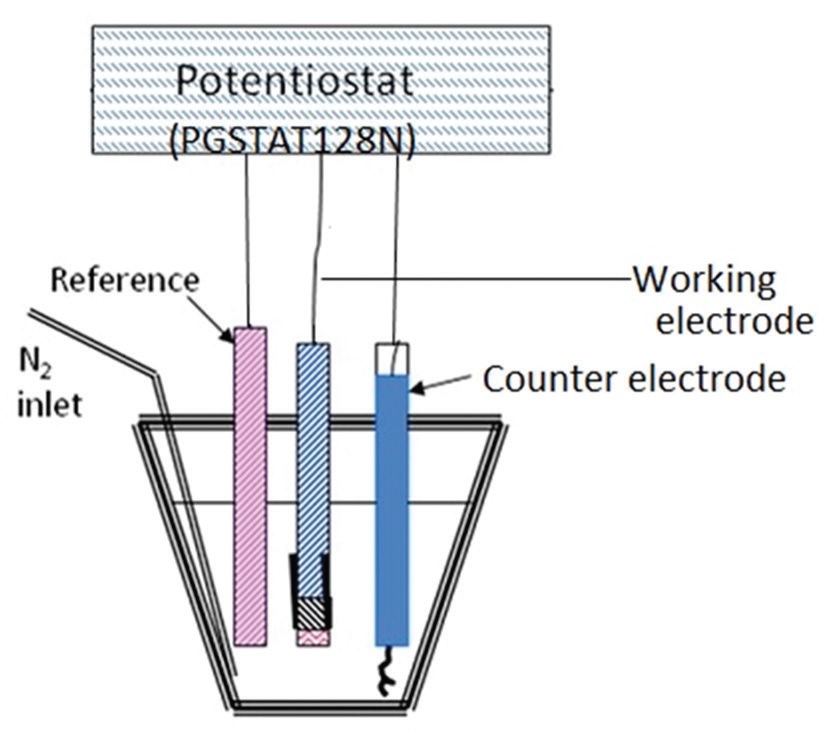
was fabricated. It is then combined with Ag/AgCl reference and platinum (auxiliary) electrode to form a three-
electrode based electrochemical biosensor for the electrochemical detection of Vibrio vulnificus as BWA in the
presence and absence of Fe3O4 nanoparticles. Fe3O4 nanoparticles were synthesized by sol-gel technique and
were characterized by ultraviolet-visible, Fourier transform infrared, transmission electron microscopy, and
X-ray diffraction techniques. Change in current response and open circuit potential (OCP) values help in the
detection of BWA in presence and absence of Fe3O4 nanoparticles. Effects of temperature, stirring and Fe3O4
nanoparticles on the BWA have also been investigated. Heating of BWA to 70.0°C for 6.0 h and the addition of
Fe3O4 nanoparticles (50 μl/ml) at room temperature has the same effect, i.e., both results in the killing of BWA
resulting in the decrease of OCP value.
Keywords
Biological warfare agents Amperometric biosensors Sol-gel method Fe3O4 nanoparticles Vibrio vulnificus.References
No references available for this article.
Citation
Harish Kumar*, Bhawana. Development of Amperometric Biosensor for the Detection of Vibrio vulnifi cus as Biological Weapon. Indian J. Adv. Chem. Sci. 2016; 4(2):130-137.