Conductometric Determination of Tiemonium Methylsulfate, Alizapride Hydrochloride, Trimebutine Maleate using Rose Bengal, Ammonium Reineckate and Phosphotungstic Acid
M. Ayad, M. El-Balkiny, M. Hosny*, Y. Metias
DOI:
Volume 4, Issue 2 | Pages: 149-159
Abstract
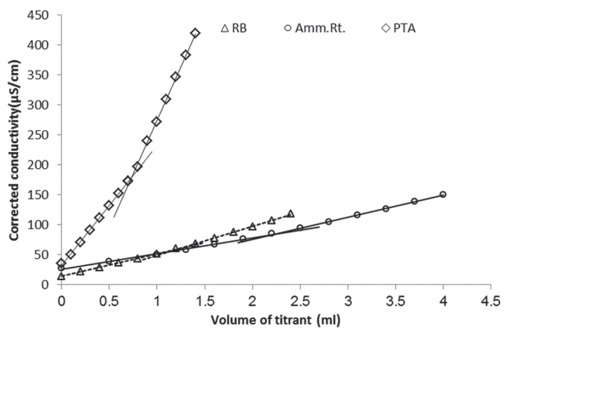
Simple, cost-effective, accurate and easily applicable conductometric titration was applied using three different
ion-pairing reagents; rose bengal, ammonium reineckate, and phosphotungstic acid represented as method A,
B and C, respectively, for determination of tiemonium methylsulfate (TIM) and alizapride hydrochloride (AL).
Method A, B had been described for the determination of trimebutine maleate (TRM). The proposed methods
have been successfully employed for the determination of pure and pharmaceutical dosage forms with studying
the effect of common pharmaceutical excipients which did not interfere with the assay procedure. Optimized
conditions including temperature, solvent, reagent concentration, and molar ratio were studied. Beer’s law
was obeyed in the concentration ranges of (1-20), (1.5-10), (1-12) mg/50 ml of TIM, (1-17), (1-10), (0.6-12)
mg/50 ml of AL for Method A, B and C, respectively, where (1-17), (1.5-10) mg/50 ml of TRM for Method A and B,
respectively. Results of analysis were validated statistically by recovery studies.
Keywords
Tiemonium Alizapride Trimebutine Conductometry.References
No references available for this article.
Citation
M. Ayad, M. El-Balkiny, M. Hosny*, Y. Metias. Conductometric Determination of Tiemonium Methylsulfate, Alizapride Hydrochloride, Trimebutine Maleate using Rose Bengal, Ammonium Reineckate and Phosphotungstic Acid. Indian J. Adv. Chem. Sci. 2016; 4(2):149-159.