Inhibitors of Lignin-Associated Polymers: Origin, Impact, and Control in Bioethanol Production
B. V. Sivaprasad, M. Subhosh Chandra*, P. Suresh Yadav, T. Chandrasekhar, K. Riazunnisa, K. Harika, A. Muni Kumari
DOI: 10.22607/IJACS.2024.1202002
Volume 12, Issue 2 | Pages: 78-92
Abstract
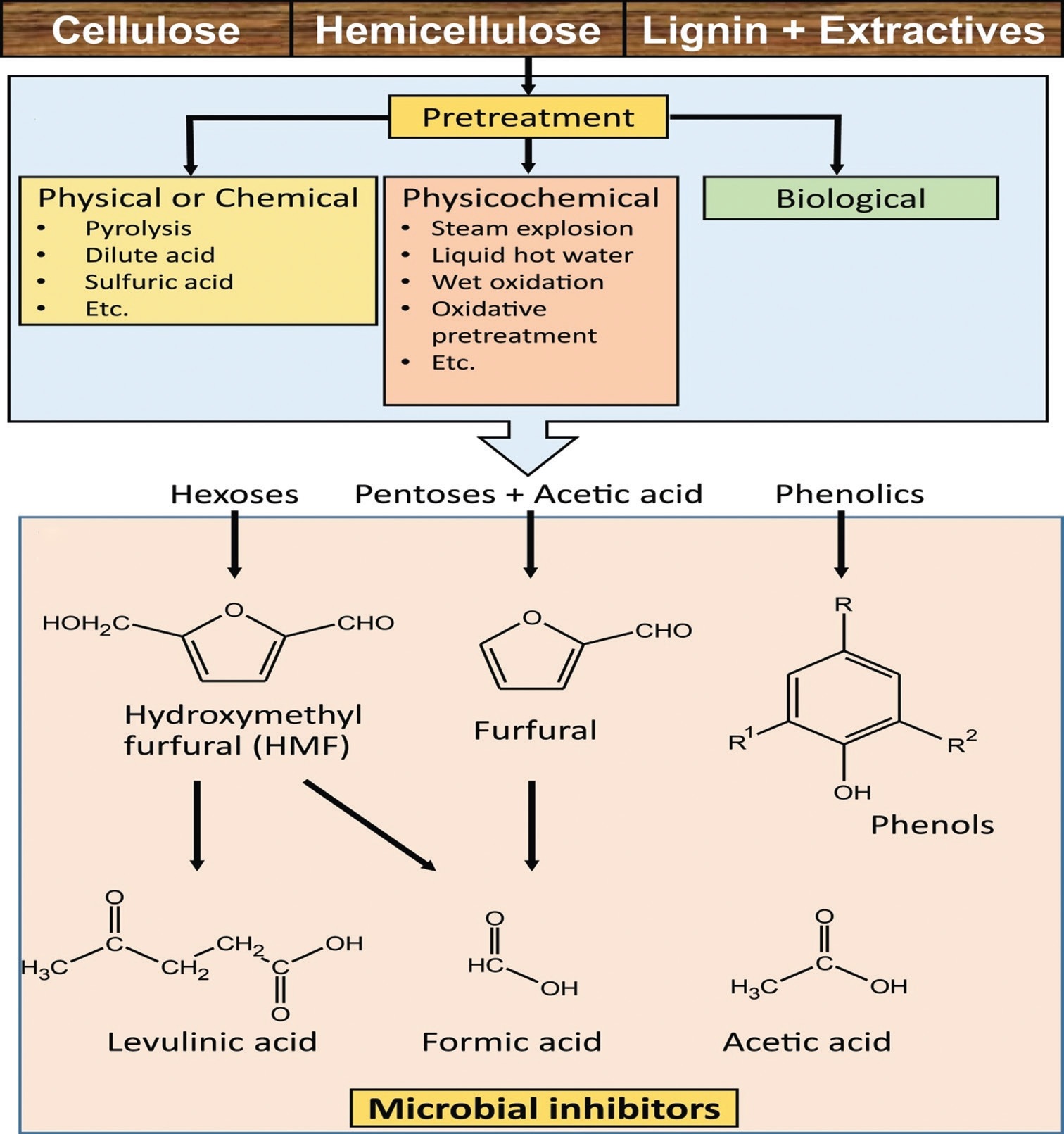
Cellulosic bioethanol (CB) produced from the fermentable sugars found in lignocellulosic polymers which are chief constituents of agricultural and forestry residues as well as food processing coproducts. CB is also considered as another option to gasoline in the transport sector; therefore, there is a growing demand for the bioethanol manufacture from lingocellulosic biomass (LCB). However, converting the cellulose and other cell wall sugars to ethanol consists of series of steps such as pretreatment, enzymatic conversion, and fermentation and is still struggling with many challenges, that is, protective structural nature of the lignocelluloses and lignocellulosic inhibitors. Commonly, phenols, organic acids, and furan compounds are the most important inhibitors during the initial steps of lignocellulosic pretreatment. More often these inhibitors have pessimistic influence on both, that is, hydrolysis of LCB and bioethanol production. Furthermore, the chemical and physical properties of this inhibitor will determine the intensity of toxicity during the bioethanol production. The proposed inhibition mechanisms of these inhibitors are eighter of the following, for example, enzymatic inactivation or vital cell structures impairment. To prevent the production loss in bioethanol production, various detoxification methods have been researched to make changes in structural alteration of inhibitors into less lethal forms or on the partition of these substances from hydrolyzates. For the proper selection of detoxification process, a profound understanding of the mechanism of inhibition and its formation is necessary. The aim of the present chapter is to discuss the most known inhibitors that are formed in different pretreatment methods depending the lignocellulosic substrate used and its impact on production efficacy of microorganisms. Methods used to analyze the inhibitors in lignocellulosic hydrolyzates. Improvement in pre-treatment processes resulted in reduction of the concentrations of all most all inhibitors which are formed during the pretreatment of LCB.
Keywords
Fermentation inhibitors Inhibitor analysis Inhibition mechanism Detoxification methods. Lignocellulosic ethanol.References
No references available for this article.
Citation
B. V. Sivaprasad, M. Subhosh Chandra*, P. Suresh Yadav, T. Chandrasekhar, K. Riazunnisa, K. Harika, A. Muni Kumari. Inhibitors of Lignin-Associated Polymers: Origin, Impact, and Control in Bioethanol Production. Indian J. Adv. Chem. Sci. 2024; 12(2):78-92.