LEfficacy of Vermicomposting for Recycling Tectona grandis and Casuarina Leaf Litter for Organic Fertilizer Production
Karthika Arumugam, Vasanthy Muthunarayanan, Seethdevi Ganesan, Swabna Vivek
DOI:
Volume 3, Issue 2 | Pages: 122-127
Abstract
The aim of this work was to study the effect of earthworm on two different types of leaf materials namely Tectona
grandis and Casuarina sps mixed with cow dung for preparation of vermicompost. For this experiment two different
species of earthworms Eisenia fetida and Eudrillus eugenia were used. The vermicompost was maintained in
laboratory condition for 6 weeks. The vermicompost caused a reduction in organic carbon (total organic carbon)
and total organic matter while an increase in total nitrogen (total Kjeldahl nitrogen), available phosphorus (total
phosphorus), electrical conductivity content and pH was noticed. The nutrient-rich vermicompost with acceptable
C:N ratio ranges (<20:1) indicates its agronomic potential. Waste mixtures also supported the earthworm growth
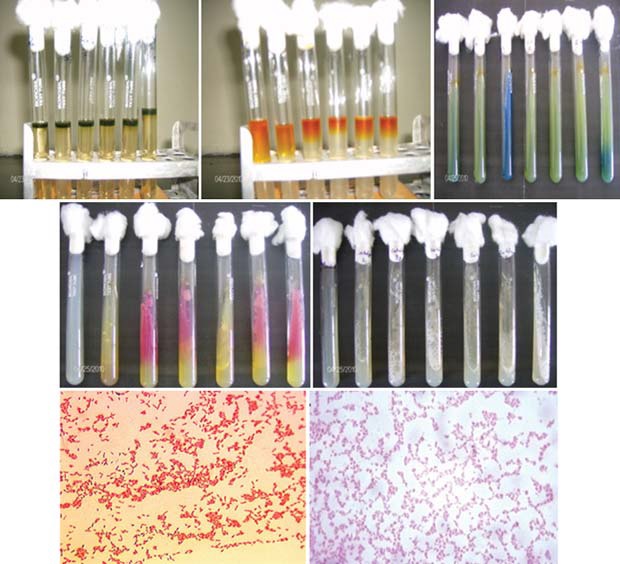
and reproduction rates in vermibeds. The Microbial study of the vermicompost revealed the presence of Bacillus
thuringiencis, Bacillus anthracis, Bacillus funiculas, Bacillus cerus, Lactobacillus patheries which might have
helped in degradation process. Further the Fourier transform infrared spectroscopy analysis clearly revealed the
degradation of organic matter using different earthworm species. The result suggests that vermicomposting could
be an effi cient technology to convert negligible leaf wastes into nutrient-rich biofertilizer.
Keywords
Vermicomposting Leaf wastes Eudrilus eugeniae Eisenia foetida and Fourier transform infrared spectroscopy.References
No references available for this article.
Citation
Karthika Arumugam, Vasanthy Muthunarayanan, Seethdevi Ganesan, Swabna Vivek. LEfficacy of Vermicomposting for Recycling Tectona grandis and Casuarina Leaf Litter for Organic Fertilizer Production. Indian J. Adv. Chem. Sci. 2015; 3(2):122-127.