Correlation between Rheological and Adhesion Properties of Polyamide Hot Melt Adhesive Synthesized from Dimer Acid (Dilinoleic acid) and Ethylene Diamine
P. Kadam, P. Vaidya, S. Mhaske
DOI:
Volume 2, Issue 2 | Pages: 124-133
Abstract
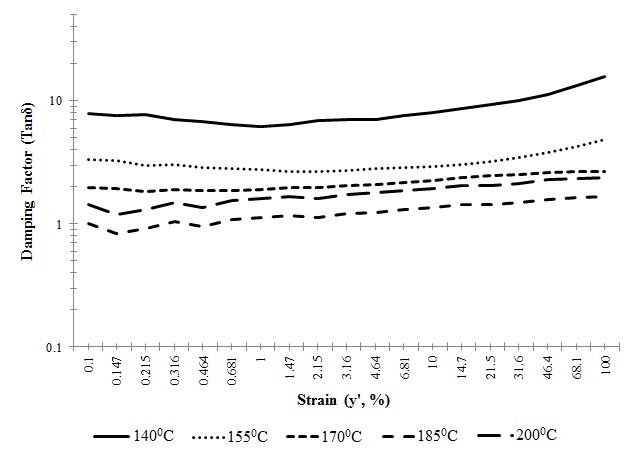
The temperature at which hot melt adhesives (HMAs) are applied is very important to be known, as it will
strongly affect the rheology of the material, ultimately affecting the adhesion properties. In this study polyamide
HMA was synthesized using high purity polymerized fatty acid (dimer acid or dilinoleic acid) and
ethylenediamine, and characterized for mechanical, thermal, adhesion and rheological properties. Adhesion
joint formation (lap and T-peel) and rheological characterization were performed at varied temperatures – 140,
155, 170, 185 and 200°C to understand the effect of temperature on the properties mentioned and also to
correlate them. From the correlative study it was found that 170°C is the best temperature to apply this
adhesive. However, it cannot be generalized for other HMAs as it depends on many factors like: molecular
weight of the adhesive, molecular weight distribution, type of glue gun, additives added, raw material used to
prepare the HMA etc. Too low temperature leads to improper wetting of the substrates, while too high
temperature leads to the formation of cross-links in the adhesive leading to optimized temperature of 170°C.
Keywords
hot melt adhesive polyamide rheology temperature.References
No references available for this article.
Citation
P. Kadam, P. Vaidya, S. Mhaske. Correlation between Rheological and Adhesion Properties of Polyamide Hot Melt Adhesive Synthesized from Dimer Acid (Dilinoleic acid) and Ethylene Diamine. Indian J. Adv. Chem. Sci. 2014; 2(2): 124-133.