Sodium Alginate-g-Acrylamide and PEG Blend Beads: Development and Controlled Release of Enalapril Maleate
C. Lakshmi Narayana Reddy, P. Rama Subba Reddy, K.S.V. Krishna Rao*, M.C.S. Subha*
DOI:
Volume 2, Issue 3 | Pages: 182-189
Abstract
Development of semi-IPN beads, based on sodium alginate-g-acrylamide (NaAlg-g-AAm), blended with poly
(ethylene glycol) were cross-linked with glutaraldehyde and used in controlled release of enalapril maleate
(ENM), an anti-hypertensive drug. The beads were characterized by Fourier transform infrared spectroscopy
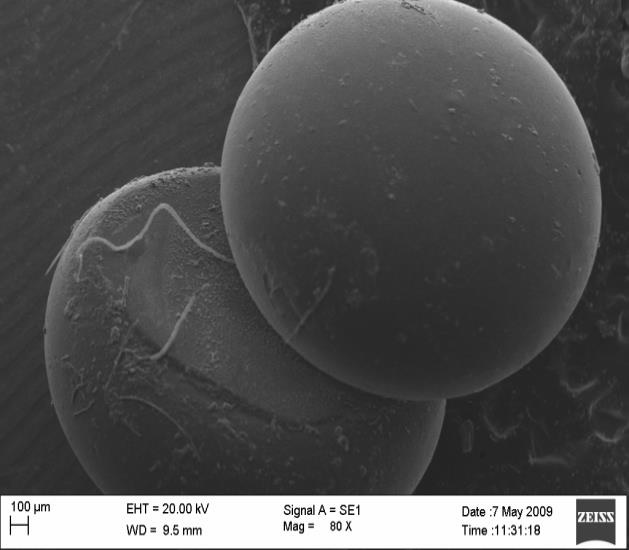
(FTIR) to confirm the grafting and cross-linking reaction, scanning electron microscopy (SEM) for
understanding of surface morphology of the beads and differential scanning calorimetry (DSC) and X-RD
studies to confirm the uniform distribution of the drug in the polymer matrix. The physicochemical
characteristics of the beads (i.e. encapsulation efficiency, in vitro release) were studied. Swelling experiments
on the beads give important information on the drug properties. The in vitro release results performed in pH 7.4
affected the release characteristics. The release data have been analyzed with nature of transport of drug
solution through the polymeric matrices. The extent of cross-linking was studied in terms of size of beads as well
as their release characteristics. Extent of drug loading varies in a linear fashion with the encapsulation
efficiency of the drug in polymer matrix. The semi-IPN matrices of this study were able to extend the release
rates from the conventional dosage release times to more than 10 h.
Keywords
Sodium alginate poly (ethylene glycol) beads drug release Enalapril Maleate.References
No references available for this article.
Citation
C. Lakshmi Narayana Reddy, P. Rama Subba Reddy, K.S.V. Krishna Rao*, M.C.S. Subha*. Sodium Alginate-g-Acrylamide and PEG Blend Beads: Development and Controlled Release of Enalapril Maleate. Indian J. Adv. Chem. Sci. 2014; 2(3):182-189.