Waste Silk Fiber Reinforced Polymer Matrix Composites: A Review
S. M. Darshan, B. Suresha, G. S. Divya
DOI:
Volume , Issue 2 | Pages: 183-189
Abstract
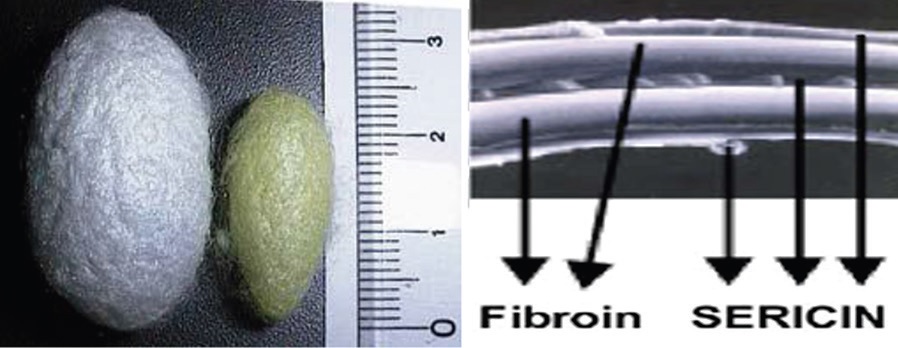
Natural fibers have recently become attractive to researchers, engineers and scientists as an alternative reinforcement for fiber reinforced polymer composites (FRPCs). Due to their low cost, fairly good mechanical properties, high specific strength/modulus, nonabrasive, eco-friendly, and biodegradability characteristics, they are exploited as a replacement for the synthetic fiber, such as glass, aramid, and carbon. Silk is one of the most precious, fibers among all textile fibers and it has a very wide range of uses such as sewing threads, clothes, home/technical textiles, and ornamental uses. The cocoons which are damaged during the cocoon-forming process are called waste silk, and because of the damage their trading value is decreased. These wastes can be reused in textiles as well as an effective reinforcement with various polymers in the fabrication of composite parts for automotive applications. This paper reviews the literature reports base on waste silk FRPCs using various silk waste fibers. Various processing methods and conditions; liquid molding, compression molding process, and injection molding are used in the polymer matrix composites productions. The mechanical properties of these waste fiber reinforced polymers are mainly influenced by the interfacial adhesion between the matrix and the fibers. Several chemical modifications are employed to improve the interfacial matrix–fiber bonding resulting in the enhancement of mechanical properties of the composites. In general, the tensile strengths of the natural FRPCs increase with fiber content, up to a maximum or optimum value, the value will then drop. However, the Young’s modulus of the natural FRPCs increase with increasing fiber loading. Characterization challenges associated with the waste silk fiber reinforced thermoplastic and thermoset composites productions were also examined. Thus, the findings of this research review can be used as a data base for further inquiring into the waste silk FRPCs in a view to enhance the development of the automotive sector.
Keywords
Waste silk fiber Silk fiber reinforced polymer composites Processing Structure Mechanical properties.References
No references available for this article.
Citation
S. M. Darshan, B. Suresha, G. S. Divya. Waste Silk Fiber Reinforced Polymer Matrix Composites: A Review. Indian J. Adv. Chem. Sci. -0001; (2):183-189.