Effect of Sequential Treatment of Paper Industry Wastewater using Aluminum Chloride and Pseudomonas putida
N. Kumara Swamy, Pratibha Singh, Indira P. Sarethy
DOI:
Volume , Issue 2 | Pages: 226-229
Abstract
The effectiveness of a two-step sequential method - chemical precipitation by aluminum chloride and subsequent
employment of Pseudomonas putida - was investigated for treatment of paper mill wastewater. Removal of color
and phenols was found to be dependent on pH. Maximum color removal (99.8%) was achieved using 4.0 g L−1
AlCl3 at pH 5, wherein 39% phenols, 96% total suspended solids (TSS), and 59% chemical oxygen demand
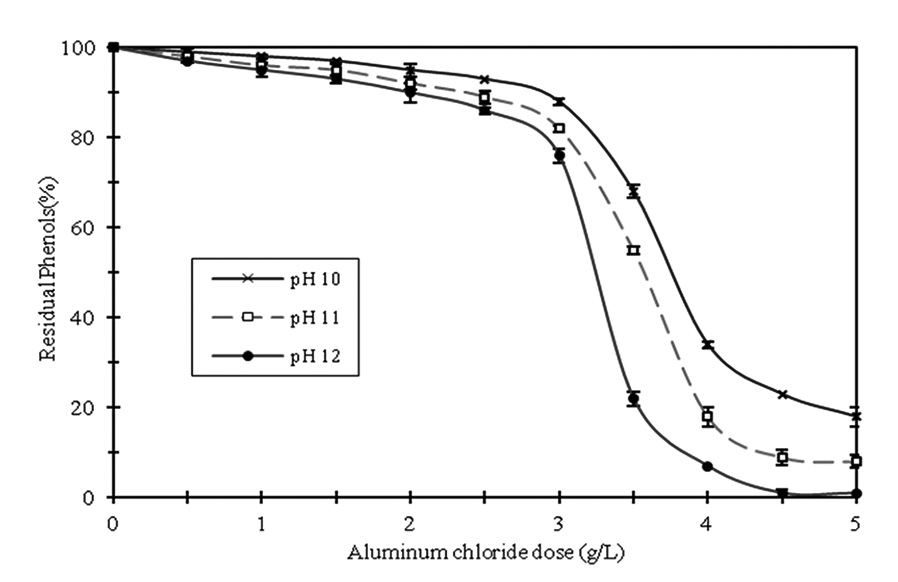
(COD) were removed leaving 32 mg L−1 residual Al(III) ions in the wastewater. Highest removal of phenols (99%)
was achieved at pH 12. The effluent from the treatment with AlCl3 at pH 5, was further processed with P. putida
at pH 7 for 48 h, leading to marginal further reductions in color, phenols, TSS, and COD but residual Al(III)
ions were sorbed to below disposal level. The proposed sequential treatment resulted in better quality water than
chemical precipitation alone.
Keywords
Wastewater treatment Sequential treatment Pseudomonas putida.References
No references available for this article.
Citation
N. Kumara Swamy, Pratibha Singh, Indira P. Sarethy. Effect of Sequential Treatment of Paper Industry Wastewater using Aluminum Chloride and Pseudomonas putida. Indian J. Adv. Chem. Sci. -0001; (2):226-229.