Cyclotriphosphazene-based Stimuli-responsive Semi-IPN Hydrogels: Synthesis, Diffusion, and Anti-cancer Drug Release Characteristics
S. Eswaramma, K.S.V. Krishna Rao
DOI: 10.22607/IJACS.2023.1101001
Volume 11, Issue 1 | Pages: 1-10
Abstract
In the recent years, there has been an emerging focus in the designing of various therapeutic devices for biomedical and biological
applications. A variety of chemical compositions, structures, morphology, desired functional properties, thermodynamic
properties, stimuli response, and chemical and physical interactions have shown significant interest in the use of natural,
synthetic, and biohybrid polymeric hydrogels for drug delivery. In the last few decades, researchers have been mainly focused
on organically modified poly(phosphazenes) (OPZs) to develop hybrid polymeric and organic-inorganic compounds. By
understanding these points, here in the present investigation, we developed stimuli sensitive Hexachlorocyclotriphosphazene
(HCP) based semi-IPN hydrogels as potential devices for controlled delivery of 5-fluorouracil (5-FU), a chemotherapeutic
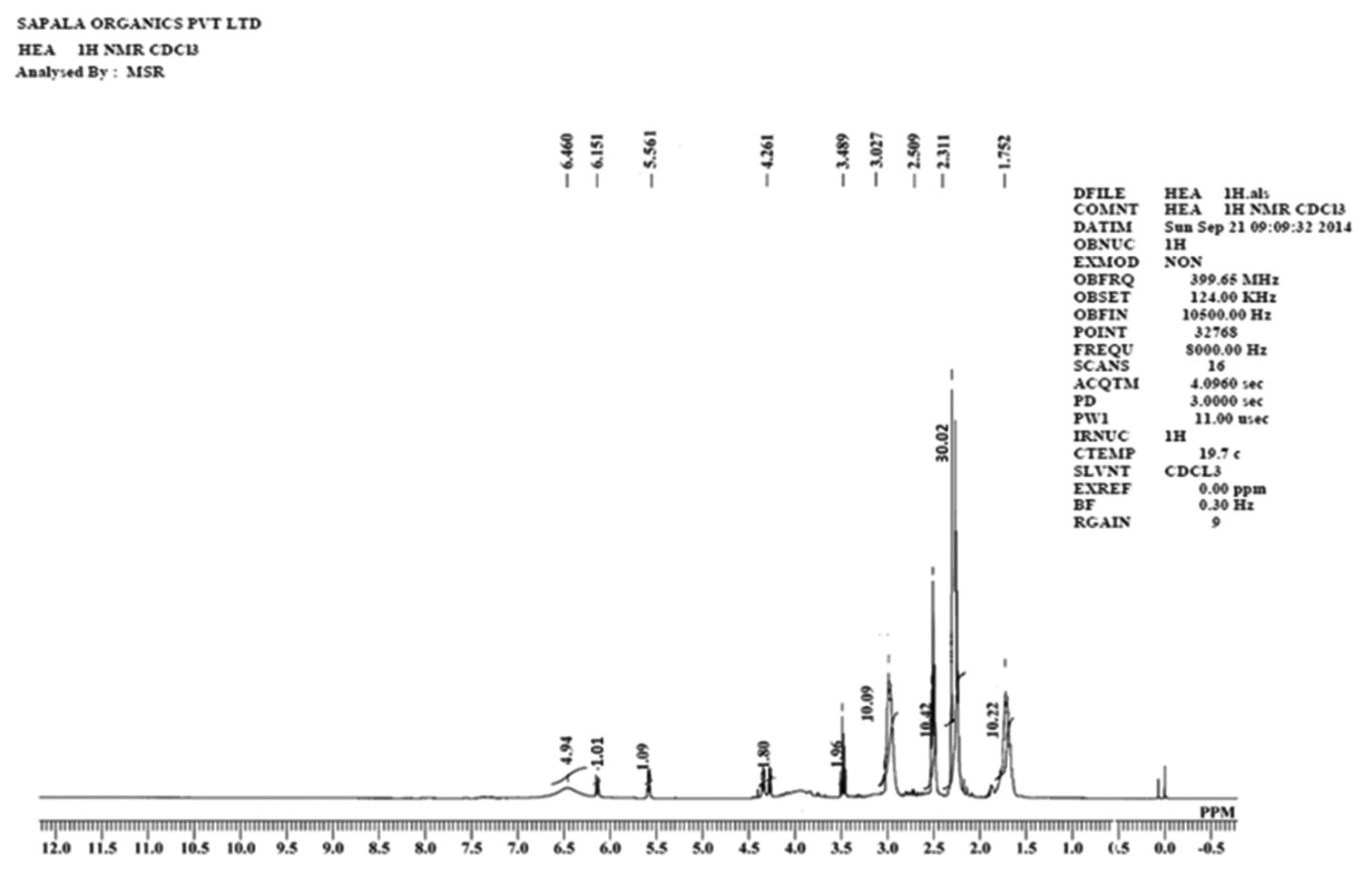
agent. At first, we synthesized a new vinyl monomer, that is, mono(ethacryloyl-2-ethoxy)-pentakis(N1,N1-dimethylpropane-
1,3-diamino)-cyclotriphosphazene using HCP, 2-hydroxy ethylacrylate and propyl amine. Then the synthesized monomer was
involved in the designing of semi-IPNs through free radical polymerization using poly(vinyl alcohol) (PVA) as a supporting
polymer backbone. The synthesized monomer was confirmed by Fourier transform infrared (FTIR), 1H, and 13C NMR. The
structural, morphological, thermal properties, and polymer-drug interactions of the networks were investigated by FTIR,
scanning electron microscope (SEM), thermo gravimetric analysis, and X-ray diffraction, respectively. From the SEM images,
it was observed that the network is compact and dense. The pH and temperature responsiveness of semi-IPNs was investigated
by performing the diffusion studies in physiological solutions ranging from pH = 1.0–10.0 and at temperatures 25oC and 37oC.
The % swelling ratio is maximum for high polymer-monomer ratio, minimum cross-linker concentration, low pH, and at 25oC.
Different network parameters ( , , ) c eM and were investigated. The in vitro release of 5-FU was conducted in pH = 1.2 and
pH = 7.4 at 25oC and 37oC, and noticed that the release was affected by both the pH and temperature and also controlled by the
composition of HCP monomer. Different kinetic models were approached to drug release profiles and finally, it was observed
that non-Fickian diffusion was involved in the release mechanism and the data were well fitted with Higuchi square root model
Keywords
Cyclotriphosphazene Poly(vinyl alcohol) Semi-IPN hydrogel 5-fluorouracil Network parameters Controlled drug release.References
No references available for this article.
Citation
S. Eswaramma, K.S.V. Krishna Rao . Cyclotriphosphazene-based Stimuli-responsive Semi-IPN Hydrogels: Synthesis, Diffusion, and Anti-cancer Drug Release Characteristics. Indian J. Adv. Chem. Sci. 2023; 11(1):1-10.