Fillers Derived from Plantation Produces: Role of Rice Husk Ash in Rubbers
V. Subrahmanian*, M. Albert Noble Einstien
DOI: 10.22607/IJACS.2017.S02007
Volume , Issue 3 | Pages: 28-32
Abstract
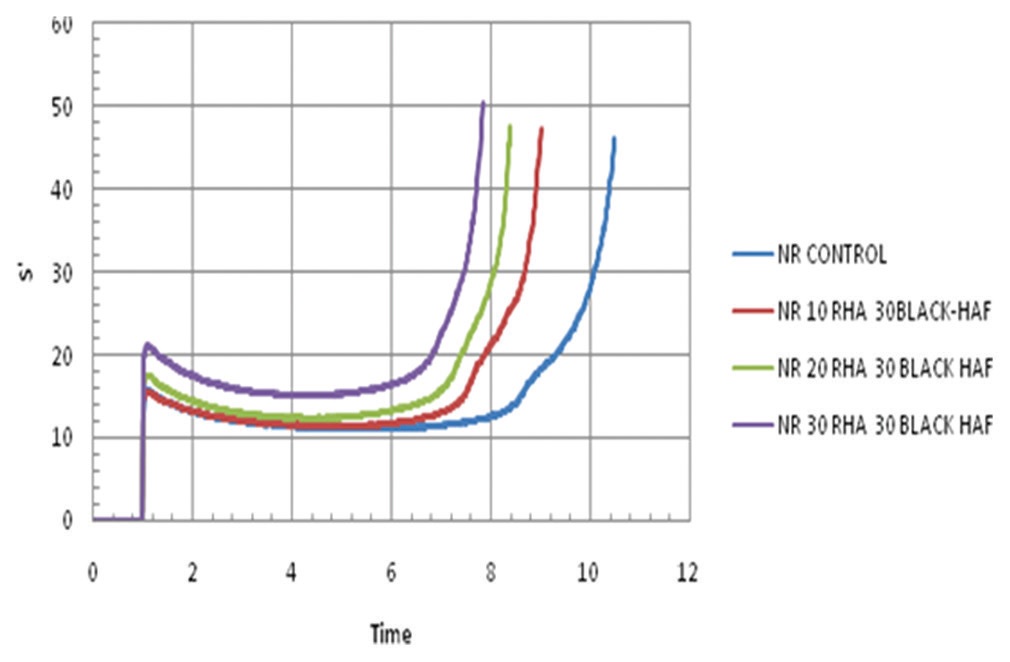
Rice husk ash (RHA) obtained from partial combustion of paddy haystack is known as filler in various applications
including as in rubber composition. The richness of silica in it has made such compositions more interesting and
useful in respect of sustainability in preference to fillers from fossil fuels. In this study, a salient account on
RHA in NR (CV 60) and ethylene propylene diene monomer (EPDM) composites are presented. The NR-based
compositions offered a stable set of properties. The scanning electron microscopy (SEM) fractography shows
that the mode of failure is mixed, that is cohesive, at the interface. The fibrous fillers remain embedded in the
rubber matrix. In case of EPDM composites, the tensile properties did not show much change. However, the SEM
fractrographs did not exhibit signs for matrix-filler separation. On the contrary, the failure was prominently in
cohesive mode as confirmed by the presence of flow lines.
Keywords
White rice husk ash Black rice husk ash Natural rubber Ethylene propylene diene monomer.References
No references available for this article.
Citation
V. Subrahmanian*, M. Albert Noble Einstien. Fillers Derived from Plantation Produces: Role of Rice Husk Ash in Rubbers. Indian J. Adv. Chem. Sci. -0001; (3):28-32.