Isolation of Carbosulfan Degrading Lysinibacillus fusiformis from Paddy (Oryza sativa L.) Soil
K. Swetha, V. Satyanrayana Swamy, M. Srinivasulu, P. Ramanamma, U. Keerthi, D. Lumbini Devi, D. Muralidhara Rao*
DOI: 10.22607/IJACS.2023.1101007
Volume 11, Issue 1 | Pages: 43-48
Abstract
A branded generic insecticide with a long history of usage in agriculture is carbosulfan. However, research indicated that
carbosulfan may be very hazardous to aquatic life. Using the enrichment culture approach, a bacterial culture was isolated from
soil samples that had received the insecticide carbosulfan 5 times at a concentration of 5 kg/ha. This bacterial culture was then
examined to see how well the pesticide broke down in a mineral salts medium. Based on the 16S rRNA gene sequence, the isolate
was recognized as a Lysinibacillus fusiformis. In terms of phylogenetic analysis and nucleotide homology, the bacteria were quite
similar. In conditions with increased amounts of carbosulfan, the bacteria acquired the ability to thrive. The creation of multi-
resistant microorganisms that may be used to return the altered environment to its previous condition may, therefore, benefit
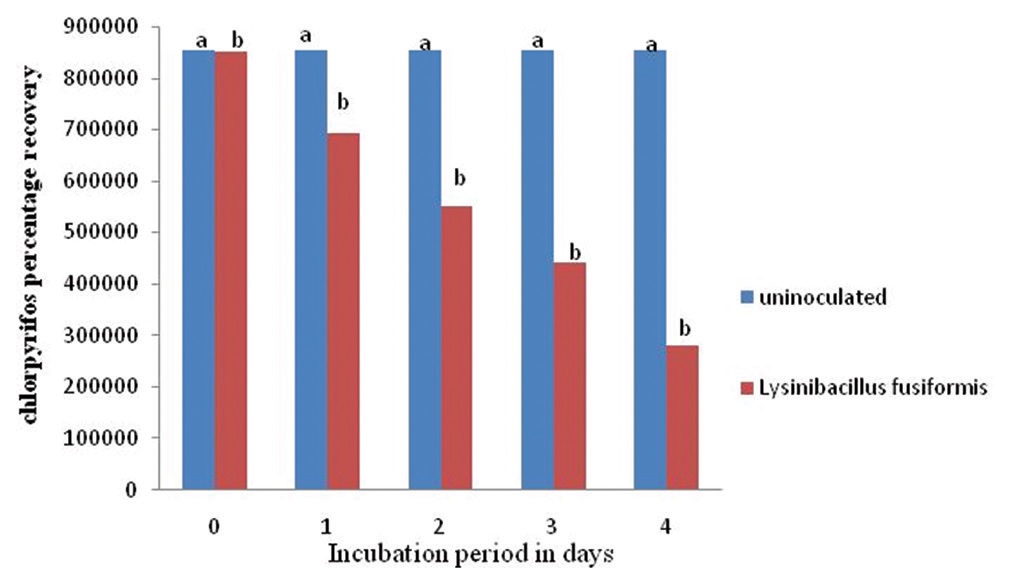
from these findings. To eliminate the carbosulfan residues from the medium, an equivalent quantity of dichloromethane was
utilized. After the required intervals, the culture filtrate was redissolved in about 10 mL of acetonitrile for the high performance
liquid chromatography analysis in the present investigation (0, 1st, 2nd, 3rd, and 4th day).
Keywords
Carbosulfan Paddy soil Lysinibacillus fusiformis High-performance liquid chromatography.References
No references available for this article.
Citation
K. Swetha, V. Satyanrayana Swamy, M. Srinivasulu, P. Ramanamma, U. Keerthi, D. Lumbini Devi, D. Muralidhara Rao*. Isolation of Carbosulfan Degrading Lysinibacillus fusiformis from Paddy (Oryza sativa L.) Soil. Indian J. Adv. Chem. Sci. 2023; 11(1):43-48.