Experimental Design Methodology Applied to Phenol Removal from Refinery Wastewater by Electrocoagulation Process
Y.V. Bilé, J. Ano*, K.E. Konan, A.S. Assémian, B.G.H. Briton, K.B. Yao, K. Adouby, A. Trokourey, P. Drogui
DOI: 10.22607/IJACS.2023.1102002
Volume 11, Issue 2 | Pages: 76-81
Abstract
The present study investigates phenol removal from petroleum industry wastewater by electrocoagulation (EC) process. The
effluent is treated in a batch reactor using successively iron and aluminum electrodes connected in a monopolar configuration.
The effects of current intensity (0.5–3A), pH (5–10), treatment time (20–80 min), and electrode type (Fe-Al) were assessed
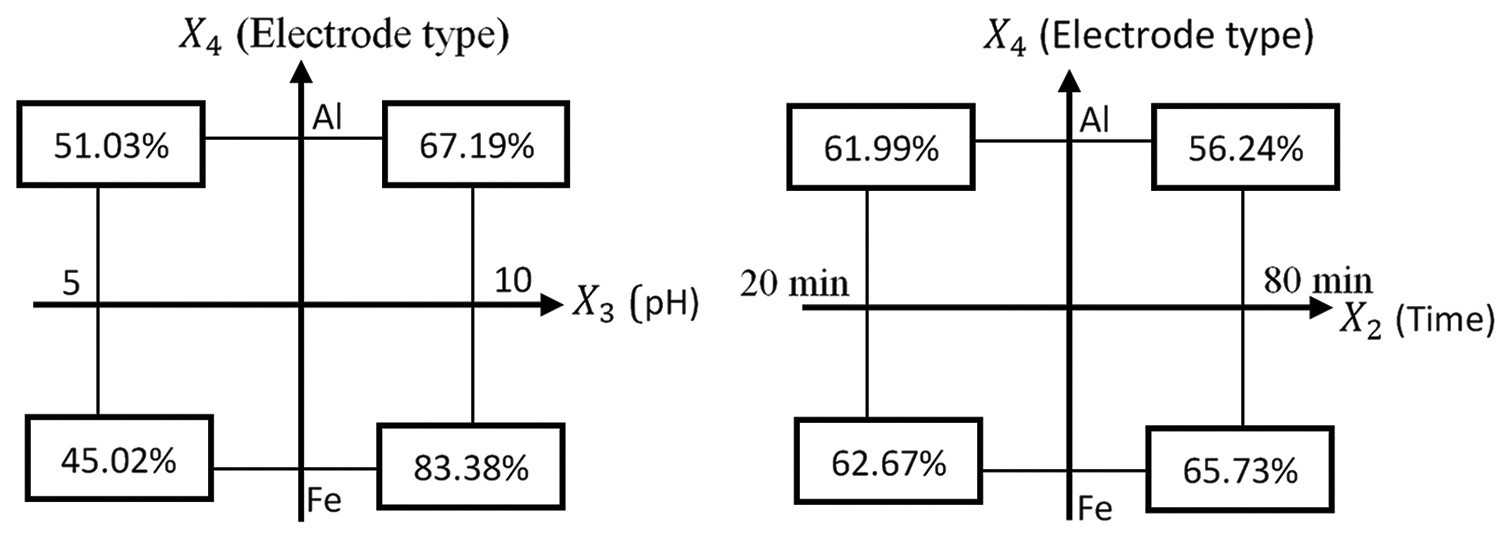
through a full factorial design. The current intensity, the pH, and electrode type are the main influent parameters on phenol
removal while treatment time has a negligible effect. Analysis of coefficients shows that current intensity and pH have positive
effects on phenol removal. The coefficient of the electrode type indicates that Fe electrodes are more efficient than aluminum
electrodes. The best performance of phenol removal is 90.36% and is obtained at a current intensity of 3A, electrolysis time
of 80 min, and initial pH of 10. The mathematical model demonstrated a good correlation between predicted and experimental
values with a high R2 of 0.992. EC is a very effective process for removing phenol from water.
Keywords
Phenol Electrocoagulation Full factorial DesignReferences
No references available for this article.
Citation
Y.V. Bilé, J. Ano*, K.E. Konan, A.S. Assémian, B.G.H. Briton, K.B. Yao, K. Adouby, A. Trokourey, P. Drogui . Experimental Design Methodology Applied to Phenol Removal from Refinery Wastewater by Electrocoagulation Process. Indian J. Adv. Chem. Sci. 2023; 11(2):76-81.