Doxorubicin Conjugated Reduced Graphene Oxide Embedded Carboxymethyl Chitosan and Sodium Alginate-based pH Responsive Composite Beads for Synergistic Anticancer Effect
B. Adilakshmi, D. Hemalatha, O. Sreekanth Reddy, K.S.V. Krishna Rao*
DOI: 10.22607/IJACS.2023.1102007
Volume 11, Issue 2 | Pages: 07-114
Abstract
Polymeric drug delivery systems (DDS) were developed to increase half-life and bioavailability, making them ideal for
biocompatible targeted drug delivery. Hence, instead of using traditional treatment methods such as surgery, chemotherapy,
and radiation, polymeric therapeutics have been used to reduce adverse effects. To address this need, the present work develops
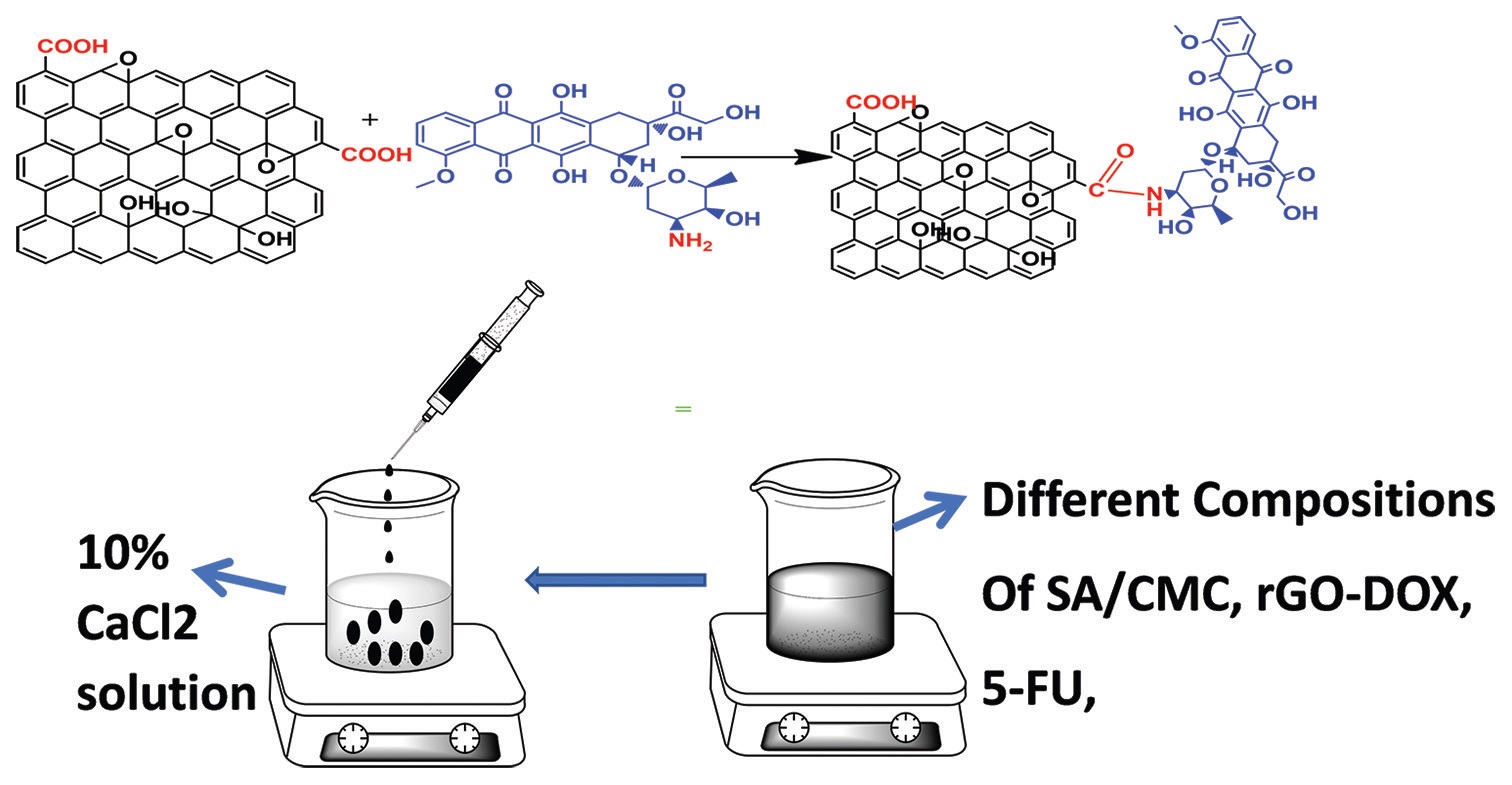
the potential natural bionanocomopsite from reduced graphene oxide, carboxymethyl chitosan, and sodium alginate DDS
by the facile gelation technique for the targeted delivery of two anti-cancer drugs (5-fluorouracil and doxorubicin). These
bionanocomposites are characterized by the Fourier-transform infrared spectroscopy, X-ray diffraction, differential scanning
calorimetry, thermogravimetric analysis, and scanning electron microscopic, further evaluated the drug loading and entrapment
efficiency. The in vitro drug release characteristics of drugs were performed in pH 1.2 and 7.4 at 37°C. In vitro cytotoxicity
experiments of bionanocomposites against MCF-7 (breast cancer cell line), results indicate that the highest rate of cancer cell
death occurred compared to pure doxorubicin. This research not only provides rationale for enhancing a DDS tailored to MCF-7,
but also suggests that DOX-rGO may be a potential therapeutic delivery vehicle.
Keywords
Doxorubicin Graphene oxide Chitosan Sodium Alginate pH responsive polymers Anti-cancer.References
No references available for this article.
Citation
B. Adilakshmi, D. Hemalatha, O. Sreekanth Reddy, K.S.V. Krishna Rao*. Doxorubicin Conjugated Reduced Graphene Oxide Embedded Carboxymethyl Chitosan and Sodium Alginate-based pH Responsive Composite Beads for Synergistic Anticancer Effect. Indian J. Adv. Chem. Sci. 2023; 11(2):07-114.