Sustainable Energy Generation of Anaerobic Electrogenic Bacteria from Soil-Sludge by Microbial Fuel Cells
Mohamed Irfan Raja Sulthan, Selvakumar Sakthivel, Kanthimathi Muthusamy,Amutha Priya Thangarajan*
DOI: 10.22607/IJACS.2023.1103005
Volume 11, Issue 3 | Pages: 193-197
Abstract
Microbial fuel cells (MFCs) are an enticing environment friendly technology that employs electrochemically active microbes
to convert organic materials into bioelectricity while causing no environmental damage, therefore combating global warming
and energy scarcity. The present study’s objective is to produce electricity using MFC and soil sludges. In both the presence
and absence of oxygen supply, the electrogenic capacity of bacteria from different soil sludges, including river, agricultural, and
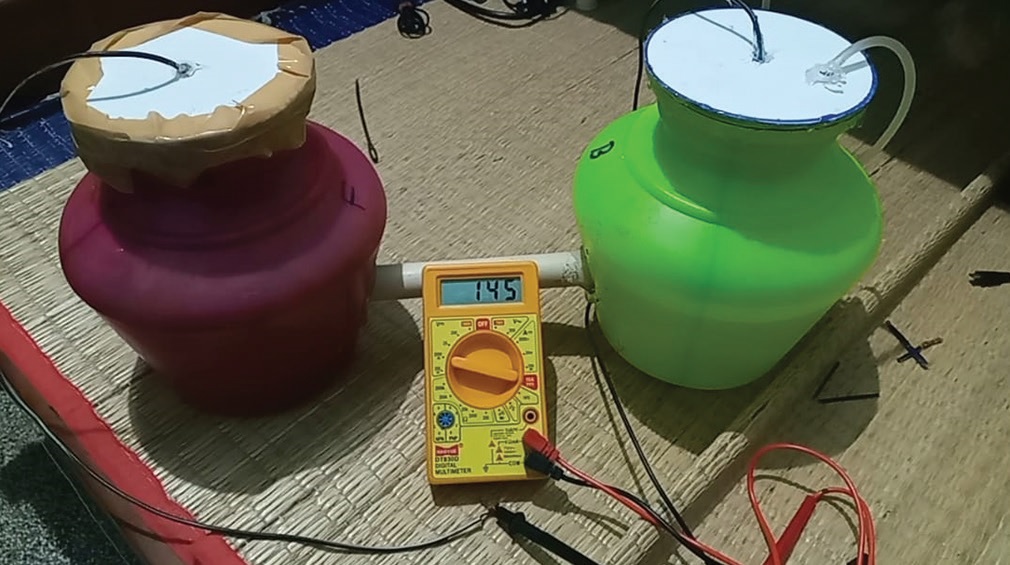
garden sludges, was examined. A two-chambered MFC is constructed using an anode, a cathode, a proton exchange membrane,
and a salt bridge as its constituent parts. Several observations indicate that this MFC may generate the maximum of up to 603
millivolts (0.603 volts) of electricity in the absence of an air pump. The two common electrogenic bacterial strains that are
isolated from all the soil sludge samples are Clostridium spp. and Geobacter spp. However, since the activity of the bacteria
gradually decreases and the voltage produced is not exceptionally high, this experiment has the drawback that it does not
produce a voltage that lasts long. Although it has certain challenges, an MFC is an alternative essentially a solution for the
renewable energy produced by bacterial activity that needs additional consideration, research, and development.
Keywords
Microbial fuel cells Electricity generation Soil sludges Electrogenic bacteria.References
No references available for this article.
Citation
Mohamed Irfan Raja Sulthan, Selvakumar Sakthivel, Kanthimathi Muthusamy,Amutha Priya Thangarajan*. Sustainable Energy Generation of Anaerobic Electrogenic Bacteria from Soil-Sludge by Microbial Fuel Cells. Indian J. Adv. Chem. Sci. 2023; 11(3):193-197.